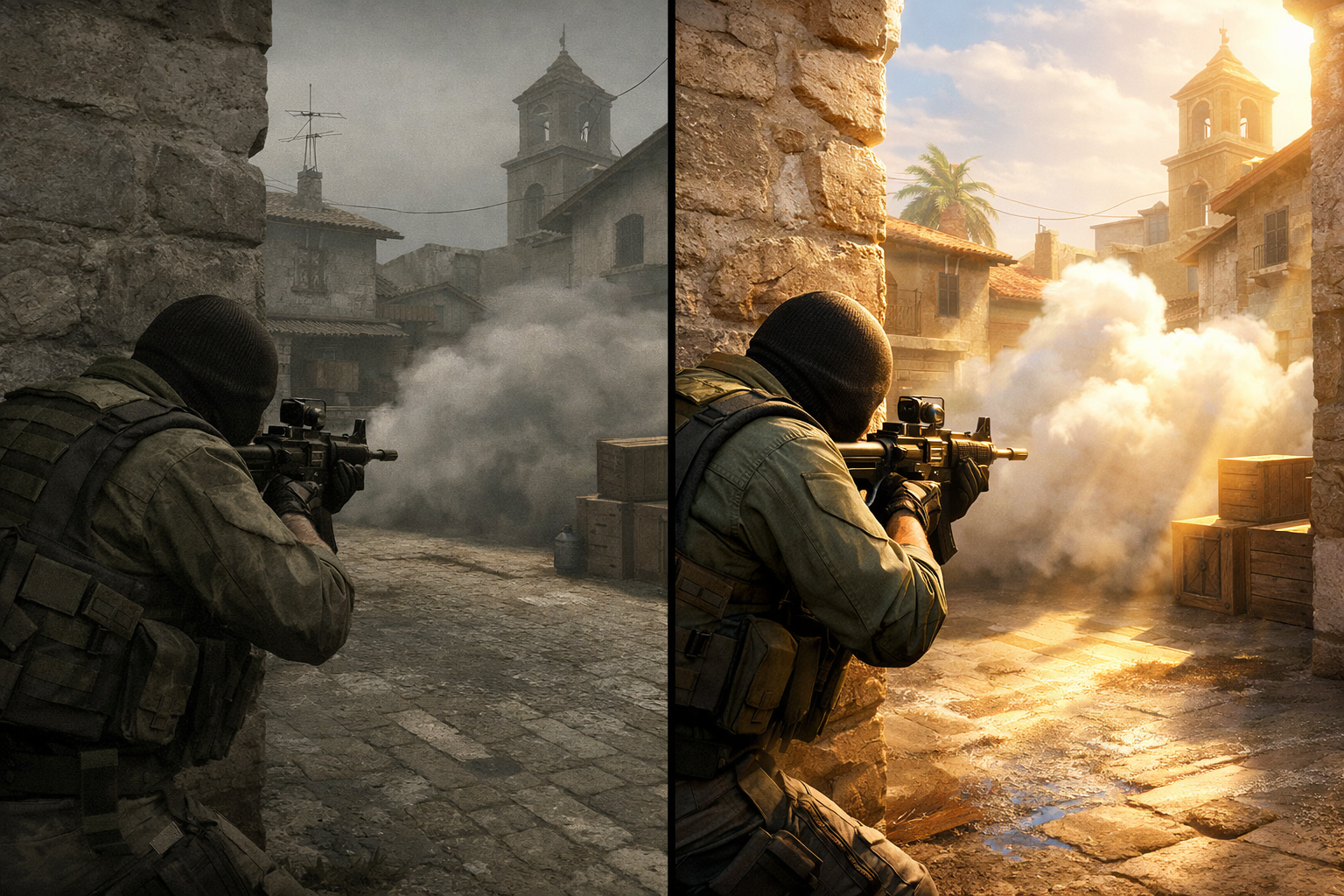
Why cs2 vs csgo feel is different for most players
CS2 vs CSGO feel is different because the games handle movement, visuals, input, and feedback in noticeably different ways. For most players, the change is not just graphics. It often comes from how aiming, counter-strafing, peeking, and even reading fights feel during real rounds.
TL;DR
- CS2 feels different mainly because movement cues, visuals, smoke behavior, and feedback changed from CS:GO.
- Beginners often confuse aim problems with visibility, timing, or input comfort issues.
- Adapt faster by changing one setting at a time and rebuilding peek and counter-strafe timing.
When players talk about CS2 vs CSGO feel, they usually mean the game seems less familiar even when the core rules are still Counter-Strike. The maps, weapons, and round structure are recognizable, but the moment-to-moment feedback can feel different.
That difference often comes from several small changes stacking together. Movement timing, visual clarity, hit feedback, smoke behavior, and your own setup can all shift how comfortable the game feels.
Beginners often assume the issue is only aim. In many cases, the bigger reason is that your brain is reading fights differently, so your old habits do not line up perfectly with CS2 yet.
The simple answer: why CS2 feels different
The simplest answer is that CS2 vs CSGO feel changes because CS2 presents information differently and asks you to adjust your timing. The game can feel heavier, cleaner, sharper, or less predictable depending on what part of play you notice most.
CS:GO built years of muscle memory for players. CS2 keeps the same competitive foundation, but movement cues, animation perception, lighting, and smoke interaction can make old instincts feel slightly off.
Even your crosshair visibility can change how fights feel. If targets seem harder to read, browsing different CS2 crosshair setups can help you separate visual discomfort from actual aim problems.
Another factor is expectation. If you expect CS2 to feel exactly like CS:GO, every small difference stands out more. If you treat it as a familiar game with updated feedback, adaptation usually becomes easier.
What beginners often mean by “feel”
In plain language, “feel” means how the game responds to your actions and how clearly you understand that response. It is not one setting or one mechanic. It is the combined impression of movement, shooting, sound, visuals, and input.
For example, a player may say spraying feels strange when the real issue is visual recoil, tracers, or target contrast. Another player may say movement feels off when they are really struggling with timing on peeks and stops.
That is why CS2 vs CSGO feel is hard to reduce to one cause. The feeling can come from what you see, what you hear, or what your hands expect after years in CS:GO.
Terms that get mixed together
Movement feel usually means acceleration, stopping, strafing rhythm, and how easy counter-strafes seem. Aim feel usually means mouse response, target tracking, recoil reading, and confidence in first bullets.
Visual feel covers lighting, shadows, model contrast, and smoke readability. Input feel is about how immediate your mouse and keyboard actions seem on screen.
These categories overlap. A keyboard change, for example, can alter how movement feels even if the game itself has not changed. That is one reason some players compare their setup with gear like the Razer Huntsman V3 Pro when they want more consistent movement inputs.
Where the difference shows up in actual gameplay
The biggest practical difference in CS2 vs CSGO feel often appears during peeks, sprays, and fast reactions. You may still know the correct play, but the timing window can seem less natural at first.
Peeking feels different because visual information arrives differently. Lighting and model presentation can change how quickly you identify a head, especially on bright backgrounds or through utility-heavy fights.
Shooting can also feel different because players often read recoil through visuals as much as through memory. If the screen feedback looks different, your spray confidence can drop even when the weapon pattern is still learnable.
Smokes are another major reason. In CS2, smoke interaction changes how you clear angles, spam common spots, and judge safety. That alone can make the whole game feel less stable until you learn new habits.
Mouse feel matters too. If your grip or sensor comfort is inconsistent, the game can seem worse than it is. A shape-focused option like the Razer DeathAdder V3 Pro is often discussed because comfort can affect how stable your aim feels over long sessions.
Why old muscle memory can fight you
Muscle memory is useful, but it is also stubborn. If you spent years learning exact visual and timing cues in CS:GO, even small changes in CS2 can create hesitation.
That hesitation shows up as second-guessing. You stop a fraction late, fire a fraction early, or overcorrect your spray because the feedback no longer matches what your hands expect.
This is also why copying one player will not solve everything. Looking at a page like YEKINDAR CS2 settings can give context, but your own adaptation still depends on your monitor, sensitivity habits, and comfort.
Common beginner mistakes when judging CS2
The first mistake is blaming every bad duel on the engine. Sometimes the issue is real, but often the bigger problem is trying to play CS2 exactly like late-stage CS:GO.
The second mistake is changing too many settings at once. If you alter sensitivity, resolution, crosshair, brightness, and gear together, you cannot tell what actually improved the CS2 vs CSGO feel.
The third mistake is focusing only on deathmatch. Deathmatch can help aim, but it does not fully teach how CS2 smokes, peeks, and map visuals affect real rounds.
- Keep one sensitivity for at least several sessions.
- Test one visual change at a time.
- Practice peeks and counter-strafes before judging aim.
- Review demos for hesitation, not just misses.
Another common mistake is assuming expensive gear fixes everything. Better gear can help in many cases, but comfort and consistency matter more than brand names alone. If you want to compare options, the Razer gear pages are more useful as reference points than as instant solutions.
How to adapt safely without overthinking it
The best way to adjust is to isolate one part of the problem. If the game feels strange, ask whether the issue is movement timing, target visibility, spray confidence, or raw mouse comfort.
Then use short testing blocks. Spend one session on peeking and stopping, one on spray control, and one on visibility settings. This makes CS2 vs CSGO feel easier to understand because you are measuring one variable at a time.
A simple beginner checklist can help:
- Use a clear crosshair and stable sensitivity.
- Play a few maps repeatedly instead of queueing everything.
- Practice stopping before shooting in short bursts.
- Watch your own fights for visual hesitation.
If the game still feels off after that, look deeper at setup consistency. Polling rate, mousepad friction, keyboard actuation, and monitor settings can all influence how immediate the game seems.
The key point is that CS2 vs CSGO feel is not imaginary. It is a real mix of mechanical and perceptual differences. Still, most players can reduce that discomfort by simplifying their setup and rebuilding timing in a focused way.
Start with one practical next step: fix your crosshair visibility, keep your sensitivity stable, and spend a week practicing clean stops before shots. That usually tells you whether the problem is adaptation, visuals, or input comfort.
Quick comparison
| Focus | Why it matters |
|---|---|
| Comfort | Helps the reader choose a more reliable path. |
| Control | Makes the practical outcome easier to understand and repeat. |
| Fit | Should match the reader’s goal, situation, and constraints instead of chasing generic advice. |
FAQ
Why does CS2 movement feel different to beginners?
CS2 can feel different because stopping, peeking, and reading motion cues may seem less familiar than in CS:GO. Many beginners are reacting to timing and visual feedback changes, not just raw movement values. That makes old habits feel slightly delayed or less reliable during fights.
Is CS2 aim actually different from CS:GO?
Aim can feel different in CS2, but the reason is often broader than mouse input alone. Visual recoil, lighting, target contrast, and confidence in spray feedback can all affect how accurate you feel. In many cases, players need time to rebuild trust in what they see.
How can I make CS2 feel more consistent?
Keep your sensitivity stable, use a clear crosshair, and avoid changing many settings at once. Practice counter-strafing and short peeks on a few familiar maps. If the game still feels off, check your mouse comfort, keyboard response, and monitor settings before making bigger changes.