Arm aim vs wrist aim cs2: what actually matters
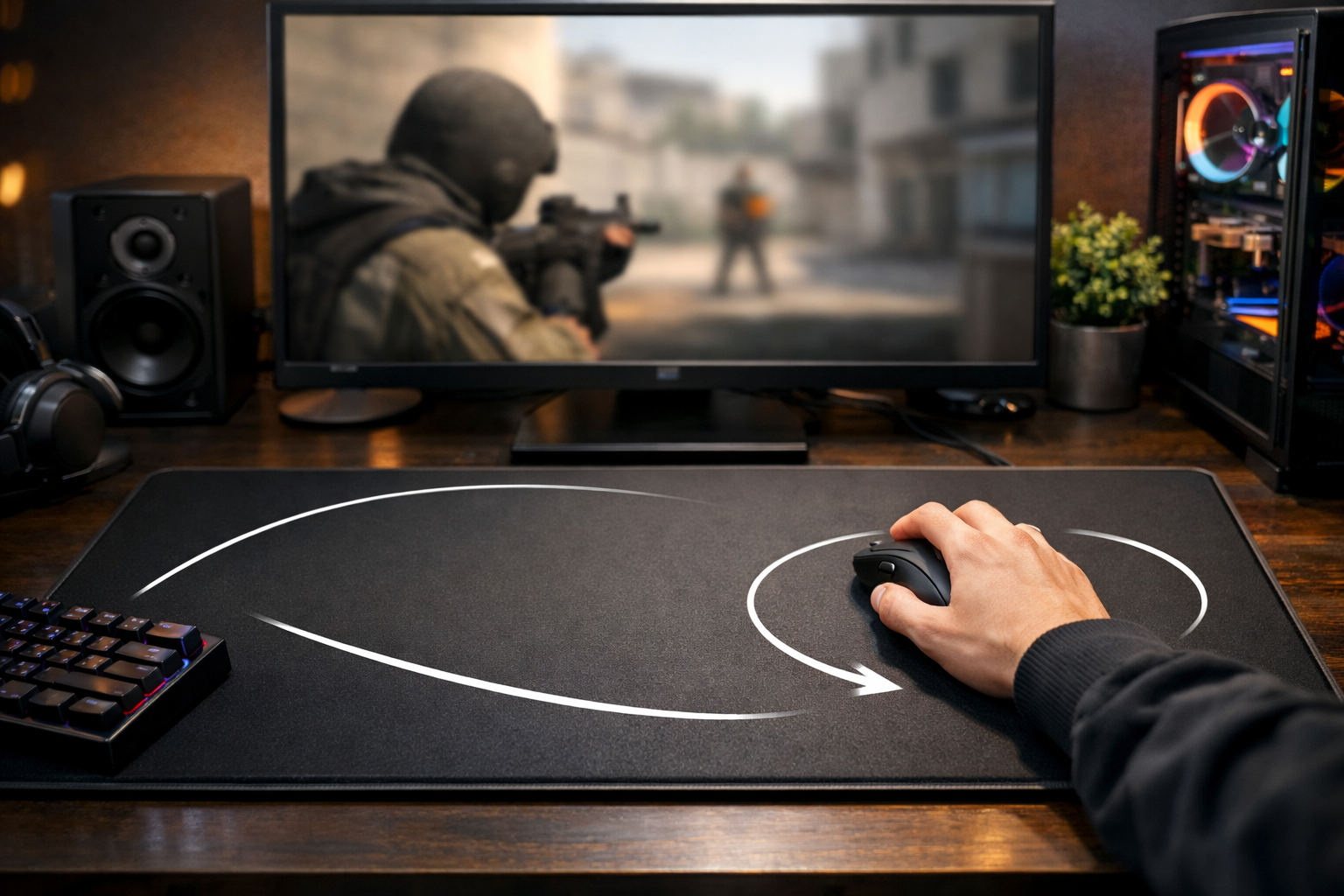
Arm aim vs wrist aim CS2 is mostly about range of motion, sensitivity, and consistency rather than one style being strictly better. Arm aim uses more forearm and shoulder movement, while wrist aim relies more on small hand adjustments. In CS2, both can work well when your sensitivity, mouse space, and habits match the way you actually aim.
TL;DR
- Arm aim and wrist aim both work in CS2, and most players naturally use a mix of both.
- Arm aim usually supports wider movement, while wrist aim often handles faster small corrections.
- Your sensitivity, mouse space, and comfort matter more than forcing one aiming label.
Players often talk about arm aim and wrist aim as if they are two fixed camps. That creates confusion, because most people in CS2 use a mix of both depending on distance, angle, and speed.
The real question is not which style wins by default. The useful question is which movement pattern gives you better control in your own setup, especially when clearing angles, tracking strafes, and making small corrections under pressure.
If you are still dialing in your visual comfort, a clean reticle from the crosshair generator can make it easier to judge whether your misses come from aim style or simple visibility issues.
The common myth: one aiming style is always better
The biggest myth around arm aim vs wrist aim CS2 is that arm aim is for serious players and wrist aim is for casual players. That sounds neat, but it ignores how aiming actually works in matches.
Arm aim usually gives more room for broad horizontal movement. Wrist aim usually feels faster for micro-adjustments and short flicks. In many cases, players combine the two without thinking about it.
Another common belief is that low sensitivity automatically means better aim. Lower sensitivity can improve stability for some players, but it also demands more desk space and more physical movement. If your pad is too small, your aim can become awkward instead of controlled.
That is one reason mousepad size matters more than many players expect. A larger surface like the SteelSeries QcK Heavy can support wider arm movement, while smaller setups often push players toward more wrist-heavy aiming.
- Arm aim usually helps with larger turns and steadier tracking.
- Wrist aim usually helps with quick corrections and compact movement.
- Most players use both, even if one style dominates.
- Sensitivity and mouse space often matter more than labels.
What is accurate, and what gets exaggerated
Arm aim is often described as more consistent. That can be true, especially for players on lower sensitivity who need smooth crosshair travel across wider angles. The exaggeration is assuming that consistency comes from the arm alone.
Consistency in CS2 usually comes from repeatable movement, stable posture, and a sensitivity you can control under stress. A player with strong wrist control can be more consistent than an arm aimer using a sensitivity that feels too slow.
Wrist aim also gets unfairly reduced to “only for flicks.” In reality, wrist movement is part of nearly every aim style because small corrections happen constantly. When you adjust onto a shoulder peek or refine head level by a few pixels, the wrist often does that work.
The better way to frame arm aim vs wrist aim CS2 is by task. Large angle changes often lean more on the arm. Fine corrections often lean more on the wrist. Your hand, forearm, and fingers work together, not in isolation.
Where arm aim usually feels stronger
Arm-dominant aiming often feels better when you clear multiple angles in sequence or track a target moving across a wider part of your screen. It can also reduce overcorrection for players who struggle with shaky micro-movements on higher sensitivity.
This style often pairs naturally with lower eDPI. That does not make it automatically superior, but it can make crosshair movement feel calmer and easier to repeat over long sessions.
Where wrist aim usually feels stronger
Wrist-dominant aiming often feels more natural for compact setups, higher sensitivities, and players who prefer quick snap adjustments. It can be effective when your crosshair placement is already close and you only need a short correction.
The exaggeration is thinking wrist aim cannot be controlled. It can, but it may become less forgiving if your sensitivity is so high that tiny hand movements create large screen movement.
How this changes your settings and setup in practice
If you are comparing arm aim vs wrist aim CS2 for your own settings, start with your physical space before changing numbers. A low sensitivity only makes sense if you have enough room to move comfortably without lifting your mouse every second.
Desk height, chair position, and pad placement also matter. If your forearm is unsupported or your wrist is bent awkwardly, your aim style can feel worse than it really is.
Many players also copy settings from strong riflers and expect the same result. Looking at pages like apEX CS2 settings can be useful for context, but it should be treated as a reference point rather than proof that one aiming style is correct.
A practical test is simple. Play several sessions with one sensitivity that encourages more arm movement, then compare it with one that lets you rely more on the wrist. Focus on first-bullet accuracy, spray corrections, and how stable your crosshair feels when holding common angles.
If your crosshair placement is already disciplined, wrist-heavy aiming may feel efficient because you rarely need huge corrections. If you often need to recenter across wider spaces, arm-heavy aiming can feel more controlled.
The safest takeaway for most CS2 players
The safest answer is that arm aim vs wrist aim CS2 is not a strict either-or choice. Most players should aim for a balanced style where the arm handles larger movement and the wrist handles refinement.
That approach usually scales better as you improve. It supports cleaner angle clearing, steadier tracking, and more reliable micro-corrections without forcing your setup into extremes.
If you want a useful next step, compare your current setup with another player reference such as KRIMZ CS2 settings, then test whether your misses come from sensitivity, mouse space, or crosshair placement rather than from the label of your aim style.
Choose the style that lets you repeat the same motion calmly in real rounds. If your aim feels controlled, your turns are comfortable, and your corrections stay small, you are probably closer to the right answer than any myth about arm aim or wrist aim suggests.
Quick comparison
| Focus | Why it matters |
|---|---|
| Comfort | Helps the reader choose a more reliable path. |
| Control | Makes the practical outcome easier to understand and repeat. |
| Fit | Should match the reader’s goal, situation, and constraints instead of chasing generic advice. |
FAQ
Is arm aim better than wrist aim in CS2?
Not by default. Arm aim can feel steadier for larger movements, while wrist aim can feel faster for short corrections. In CS2, the better option is the one that matches your sensitivity, desk space, and ability to repeat the same motion consistently in real rounds.
Do most CS2 players use both arm and wrist?
Yes, in many cases they do. Even players who describe themselves as arm aimers still use wrist movement for fine corrections. Likewise, wrist-focused players often use the arm for wider turns, angle clearing, and recentering across larger parts of the screen.
How do I know which aim style fits me?
Test your setup over several sessions instead of one match. Check whether you can clear angles comfortably, stop overflicking, and make small corrections without tension. If a style feels repeatable and controlled under pressure, it is usually the better fit for your CS2 settings.