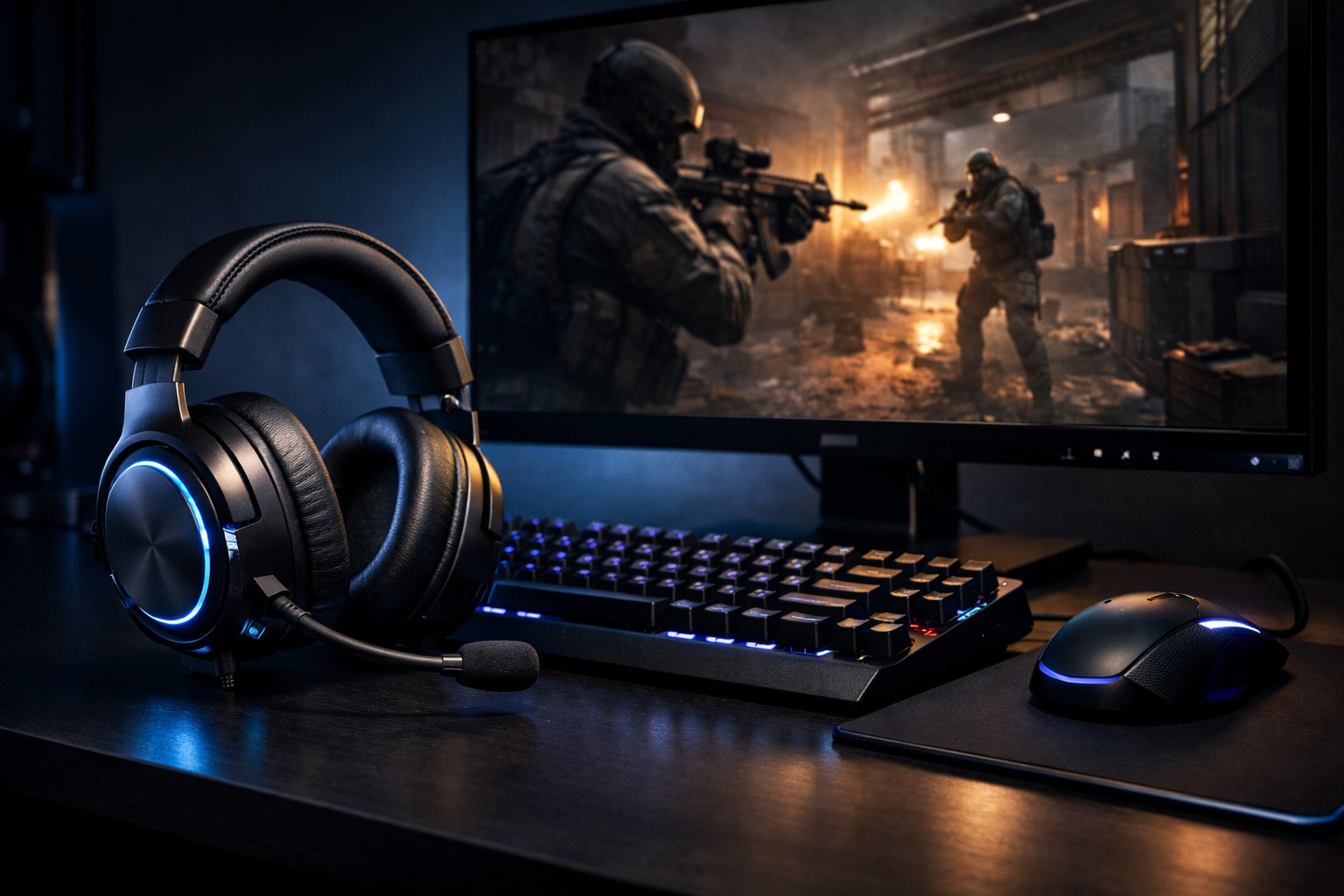
Best headset for cs2 footsteps in 2026: how to choose the right one
The best headset for CS2 depends on how clearly it separates footsteps, reloads, and distant utility without masking them in heavy bass. For most players, the best headset for CS2 is one with precise imaging, controlled low end, and comfort you can wear through long sessions.
TL;DR
- For footsteps, prioritize imaging, controlled bass, and comfort over flashy features.
- Closed-back competitive headsets are usually the safest choice for ranked CS2.
- Choose based on your room noise and playstyle, then keep audio processing simple.
Choosing a headset for Counter-Strike 2 is less about flashy features and more about hearing useful detail under pressure. Footsteps in CS2 are short, directional, and easy to blur when a headset pushes too much bass or has weak positional imaging.
That is why the best headset for CS2 is not always the most expensive model. What matters more is how well it places sound around you, how cleanly it handles mid and high frequencies, and whether you can keep wearing it without fatigue.
If you want a broader starting point, the best headset for CS2 guide covers more general picks. This article stays focused on one decision: which type of headset helps you hear footsteps most reliably in 2026.
What actually matters for hearing footsteps in CS2
Footstep clarity comes from a few traits working together. Imaging tells you where a sound is coming from, separation helps footsteps stand apart from gunfire and utility, and tuning decides whether subtle cues stay audible.
For CS2, strong imaging usually matters more than huge bass or cinematic sound. A headset with restrained low end can often make close and mid-range steps easier to track, especially on cluttered maps with layered audio.
- Imaging: helps place enemies left, right, above, or behind.
- Tuning: controlled bass and clear mids often reveal steps better.
- Comfort: long matches punish heavy clamps and hot ear pads.
- Isolation: useful if room noise competes with in-game cues.
- Consistency: easy plug-and-play sound is often better than endless software tweaking.
Open-back style headphones can sound wider, but many players still prefer closed-back headsets because they isolate better and keep focus during ranked sessions. In many cases, the best headset for CS2 is the one that gives you repeatable directional cues in your actual room, not the one with the widest sound on paper.
It also helps to keep expectations realistic. A headset can improve how clearly you notice audio information, but it cannot fix weak positioning habits, poor map awareness, or bad timing on your peeks.
Comparing the main headset options for CS2 footsteps
Most buyers end up choosing between three practical routes: competitive closed-back gaming headsets, warmer all-rounder headsets, and headphone-style options with a separate mic. Each can work, but they solve different problems.
| Option | Main benefit | Main limitation | Best for |
|---|---|---|---|
| Competitive closed-back headset | Clear imaging, isolation, easy setup | Can sound less full for music | Players focused on ranked CS2 |
| Warm all-rounder headset | Comfortable, versatile, fuller sound | Extra bass can mask subtle steps | Mixed gaming and casual use |
| Headphones plus separate mic | Often strong detail and tuning flexibility | Less convenient, more desk setup | Users who want audio first |
The first category is usually the safest answer for footsteps. These models tend to keep bass tighter and directional cues more obvious, which is why many players start here when searching for the best headset for CS2.
The second category can still work well, but it needs more care. If a headset sounds thick or boomy, footsteps may blend into ambient map noise, grenade effects, and your own movement.
The third route can offer excellent detail, though it is less simple. If you do not want extra cables or a separate microphone, a dedicated gaming headset is often the cleaner choice.
One commonly discussed example is the Logitech G Pro X headset, which fits the competitive closed-back profile. It is a useful reference point because this type of tuning often aims at positional clarity rather than oversized bass impact.
Which headset type fits your playstyle?
If you mostly queue Premier, scrim, or play faceit-style matches, prioritize imaging and isolation first. In that case, the best headset for CS2 is usually a closed-back model with a balanced or slightly bright sound signature.
If you split time between CS2, single-player games, and music, you may prefer a more relaxed all-rounder. Just be aware that a warmer headset can sound nicer overall while being less precise for footsteps.
If your room is noisy, closed-back isolation becomes even more valuable. A technically wider headset means less if keyboard noise, fans, or people nearby keep covering the details you are trying to hear.
Comfort also changes the decision more than many buyers expect. A headset that sounds good for 20 minutes but causes pressure after two maps can hurt focus, and that can matter as much as raw audio quality.
Looking at how competitive players build stable setups can help narrow your choices. Browsing a page like NAF CS2 settings will not tell you a single perfect headset, but it does show the value of consistent gear and repeatable settings.
A practical path to pick the best headset for CS2
Start with your main use case, not the marketing sheet. If your goal is hearing footsteps in ranked CS2, choose a headset that is known for clean positioning, moderate bass, and easy comfort over long sessions.
Then check whether you need isolation or versatility. Isolation points you toward competitive closed-back models, while versatility may justify a warmer headset if CS2 is only part of your weekly playtime.
After that, keep software changes small. Heavy virtual surround or aggressive EQ can sometimes make directional cues feel less natural. In many cases, simple stereo with light tuning works better for CS2 than layered processing.
If you are still comparing options, the broader CS2 guides hub is a good next step for related setup choices. Audio works best when the rest of your setup is stable too, from display clarity to in-game settings.
My recommendation is conditional but simple. For pure footsteps and competitive focus, buy a closed-back headset with strong imaging and restrained bass. If you want one device for everything, accept a small trade-off in footstep precision for better all-round sound.
That is the clearest way to choose the best headset for CS2 in 2026. Pick for your room, your playstyle, and your tolerance for extra setup, then keep your audio chain simple enough to stay consistent match after match.
FAQ
Do closed-back headsets help more in CS2?
In many cases, yes. Closed-back headsets can block room noise and make short audio cues easier to notice. They also tend to keep your focus on in-game sound, which is useful when footsteps are subtle or mixed with utility and gunfire.
Is virtual surround good for hearing footsteps?
It can help some players, but it often makes positioning less consistent than clean stereo. For CS2, many users prefer stereo first, then only small EQ changes if needed. The goal is reliable directional cues, not a bigger or more dramatic sound.
Should I choose comfort over pure audio detail?
If you play long sessions, comfort matters a lot. A headset that sounds slightly better on paper can still be the worse choice if clamp force, heat, or pad pressure distracts you after a few maps. Consistent comfort often supports better focus and better decisions.