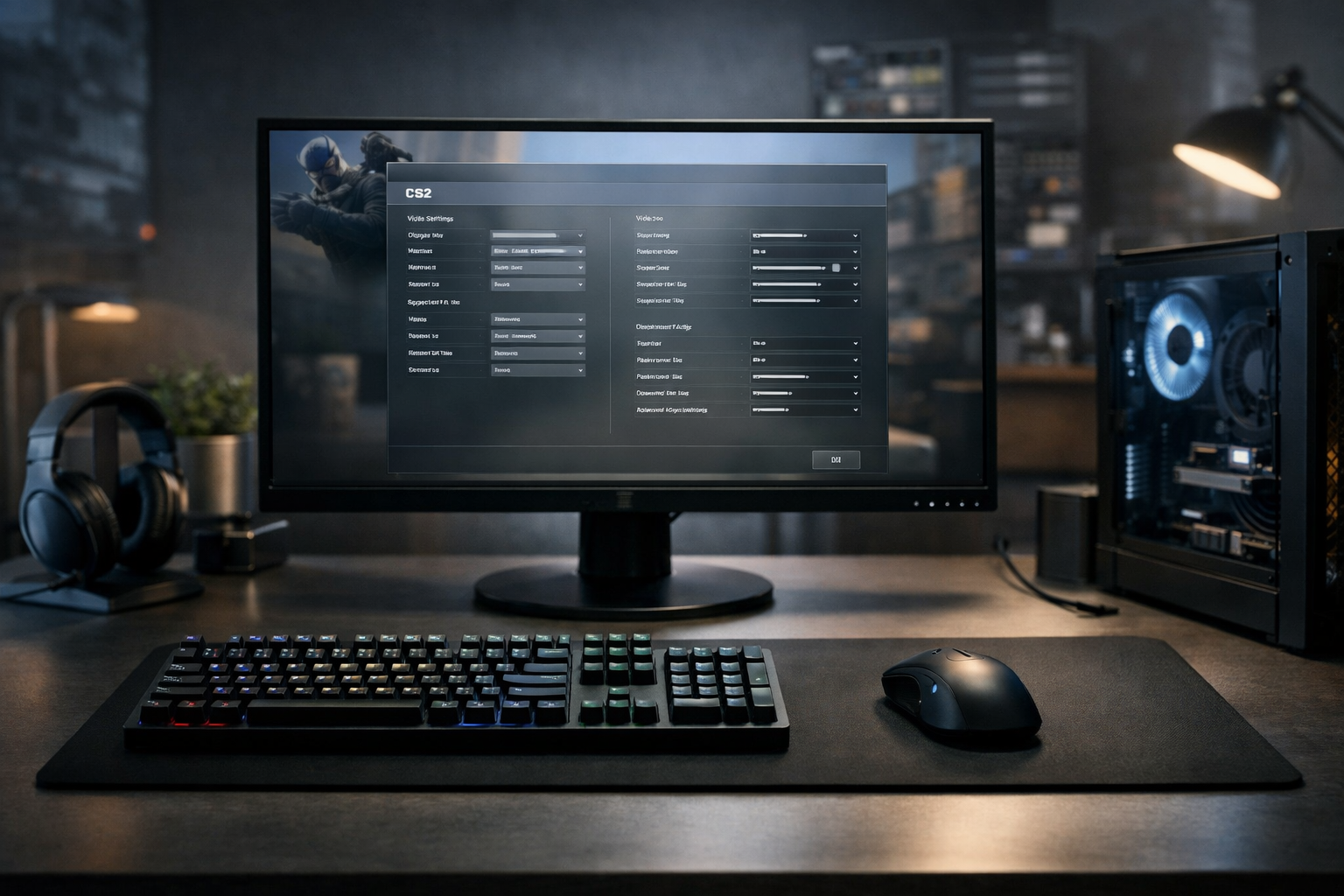
CS2 launch options guide: how to use them safely
A CS2 launch options guide helps you add startup commands without creating avoidable problems. The safe approach is simple: use only a few proven options, change one thing at a time, and verify that performance or stability actually improves.
TL;DR
- Do not copy long CS2 launch strings from old posts or videos without understanding each flag.
- Use only a few launch options with a clear purpose, and change one variable at a time.
- Test each option under the same conditions and remove anything that does not show a repeatable benefit.
Many players treat launch options like a shortcut to better FPS or lower input delay. In CS2, that assumption can cause more trouble than benefit. A careful CS2 launch options guide starts with one rule: if you do not know what a command changes, do not add it.
The Source 2 version of Counter-Strike does not reward huge launch strings the way older forum posts suggest. Some commands are outdated, some do very little, and some can create confusing side effects. If you want a broader setup baseline before changing startup flags, the main CS2 guides hub is a useful place to compare related settings.
Safe use is less about finding secret commands and more about avoiding common mistakes. That matters because launch options load before you even enter a match, so a bad flag can affect stability, fullscreen behavior, or how easy it is to troubleshoot later.
The biggest mistake: copying long launch strings
The most common error is pasting a long list of commands from an old video, Reddit thread, or config pack. Many of those strings mix useful options with legacy flags from older Counter-Strike versions. In many cases, players keep them for months without knowing which part helps and which part does nothing.
This is where a CS2 launch options guide should be strict. Fewer options are usually safer because they reduce conflicts and make testing easier. If you add ten commands at once, you cannot tell which one caused a crash, changed your display mode, or failed to do anything.
- Mistake: adding a long copied command list all at once
- Fix: start with only one or two options you understand
- Mistake: using old CS:GO flags without checking relevance
- Fix: remove anything outdated or unclear
- Mistake: chasing placebo tweaks for FPS
- Fix: test changes with the same map and settings
A safer mindset is to treat launch options as small startup preferences, not a performance pack. If your system already struggles, hardware and in-game settings often matter more than startup flags. For example, players looking for smoother frame pacing may get more value from checking a best GPU for CS2 guide than from stacking random commands.
Why bad launch options can hurt your game
Unsafe launch options can create problems that look unrelated at first. You might see odd fullscreen behavior, startup errors, unstable alt-tab performance, or settings that seem to reset. Because the issue starts before the game fully loads, it can be harder to identify than a bad video setting.
Another problem is false confidence. A player may feel the game is smoother after adding several flags, but the improvement often comes from a restart, a map change, or normal variance in frame times. That is why any solid CS2 launch options guide should separate measurable changes from assumptions.
There is also a maintenance issue. The more custom startup commands you use, the more variables you must revisit after updates. CS2 changes over time, and options that once seemed harmless can become unnecessary. Keeping your launch line short makes future troubleshooting much easier.
This matters even if you care mostly about competitive consistency. Many players spend time copying pro-style setups, but pros also rely on stable gear, repeatable settings, and clean systems. If you are comparing your setup habits with a player page like Stewie2K CS2 settings, the useful lesson is consistency, not blindly copying every tweak you see online.
What to use instead: a safer launch options approach
The safer fix is simple: use launch options only for clear startup behavior you actually want. Good examples are options that control how the game opens, such as starting in a chosen display mode or skipping intro video behavior when relevant. The key is that each option should have an obvious purpose.
A practical CS2 launch options guide also means keeping a plain text note of your current launch line. That way, if a change causes issues, you can roll back quickly. This sounds basic, but it saves time when you are trying to remember whether a problem started after a driver update or after a startup tweak.
Build a minimal launch line
Start with no launch options at all, then add only what solves a real problem. If the game already opens correctly and runs fine, the safest choice may be leaving the field empty. Launch options are optional, not required.
When you do add one, write down why you added it. If you cannot explain the reason in one sentence, it probably does not belong there. That habit keeps your setup clean and makes future testing much more reliable.
Match launch options to the rest of your setup
Startup commands should support your full setup, not fight it. If you are already tuning peripherals and display behavior, keep those changes separate so you can isolate results. For example, if you are also changing input hardware, review a focused page like the best mouse for CS2 instead of mixing hardware decisions with launch option experiments.
This separation matters because players often change too many variables in one session. A new mouse, a new resolution, and new launch options can all affect feel. If the game feels worse, you need a clean way to identify the real cause.
How to confirm a launch option actually helped
The final step in any CS2 launch options guide is verification. A launch option is only useful if it produces a repeatable result. That means testing under the same conditions, not relying on one good deathmatch or one smooth pistol round.
Use the same map, same video settings, and similar background apps for each test. Check startup behavior first, then look at stability, frame pacing, and whether the game behaves normally during alt-tab and fullscreen transitions. If the benefit is unclear, remove the option and compare again.
A simple before-and-after method often works best. Play a short session with no launch option, note what happens, then repeat with one added command. If you cannot describe a clear improvement, the safer choice is usually to remove it.
Be especially careful with any option recommended as a universal FPS boost. In many cases, real gains come from graphics settings, drivers, or hardware balance rather than startup flags. If your system still feels inconsistent, related setup choices like surface control from a best mousepad for CS2 guide can improve comfort and consistency more than another copied command.
Keep only what you can justify
The best long-term habit is to keep a short launch line and remove anything you cannot explain. That is the safest conclusion of this CS2 launch options guide. Launch options can be useful, but only when they solve a specific startup need and do not create new problems.
If you remember one rule, make it this: one change at a time, then test it properly. That approach can protect stability, reduce placebo tweaks, and leave you with a setup that is easier to trust in matches. Safe launch options are not about using more commands. They are about using fewer, better ones.
FAQ
Are launch options necessary for CS2?
No. CS2 can run perfectly well without any launch options. They are best used for specific startup preferences or troubleshooting. If your game opens correctly and feels stable, leaving the launch options field empty is often the safest choice.
Can old CS:GO launch options still help?
Some older flags may still appear in guides, but that does not mean they are useful in CS2. Many are outdated, unclear, or unnecessary. It is safer to avoid old copied strings unless you understand each command and can verify its effect.
How should I test launch options safely?
Add one option at a time and test it under the same conditions. Use the same map, video settings, and background apps. Focus on repeatable results like startup behavior, stability, and frame pacing, then remove any option that does not show a clear benefit.